

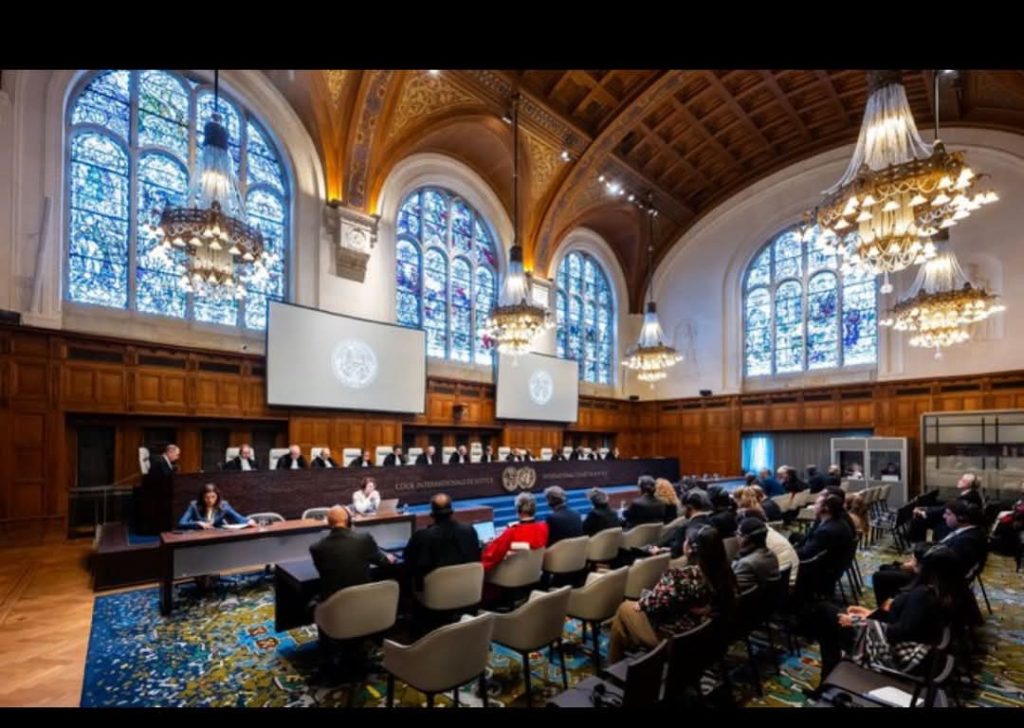
Port Sudan, April 15, 2025 (SUNA) – The opening of proceedings in the case between Sudan and the United Arab Emirates before the International Court of Justice – the highest international judicial body – marks a pivotal moment in the international response and attention to the dangers of foreign interference in the war ignited by the Rapid Support Forces (RSF) militia in Sudan. This war has resulted in the genocide of the Masalit tribe in West Darfur, and its repercussions continue to threaten the lives of innocent civilians, even those in the Zamzam and Abu Shouk displacement camps in North Darfur.
Experts and specialists say this step is in the right direction, and that condemning the UAE requires no further evidence, as the evidence is abundant. The war, sparked by the RSF militia and its allies on April 15, 2023, is considered one of the worst and most brutal wars in modern history due to the unspeakable violations and abuses that have accompanied it. It also targeted the very existence of Sudan as a state on the map, aiming to fragment its unity, obliterate its identity, and plunder its resources and wealth. This was planned and prepared for by the rebel militia and its allies well in advance, taking on a political character through sharp polarization and alignment by certain political forces and entities that dominated the political scene after the fall of the al-Bashir regime. These forces attempted to promote the militia and its leaders, presenting and marketing them as guardians of democracy.
The slogans they raised served as shields, fronts, and cloaks for others to work together, fueling hatred and exclusion, and ultimately leading to war. Regarding the lawsuit filed by Sudan against the UAE at the International Court of Justice, experts and specialists say the move was in the right direction, that condemning the UAE requires no further evidence, and that the evidence is abundant.
UAE Complicity:
International law expert and renowned lawyer Dr. Nabil Adib told the Sudan News Agency that Sudan’s lawsuit against the UAE is based on allegations of UAE complicity with the Rapid Support Forces militia, providing them with material support and leveraging its international influence to commit genocide. The main obstacle to this lawsuit is that the International Criminal Court’s jurisdiction is based on Article 9 of the Convention on the Prevention and Punishment of the Crime of Genocide, to which the UAE entered a reservation upon signing the Convention.
The Rule of Separation:
Dr. Adib added that the rule of separation in this matter rests on the permissibility of reservations to the aforementioned article. Article 19(3) of the Vienna Convention on the Law of Treaties stipulates that states may enter reservations if the treaty does not prohibit reservations or if the reservation falls within the category of permissible specific reservations, provided that the reservation is not incompatible with the object and purpose of the treaty.
A Victory in the Field of Justice:
Legal expert and political analyst Dr. Othman Hassan Othman says that Sudan achieved a major victory in the field of justice for its people with the convening of the International Court of Justice session on Thursday. The court presented the world with evidence proving the reality of the unjust aggression that the Sudanese people have been subjected to since April 15, 2023, and which is directly supported by the United Arab Emirates and other countries and organizations in the region and the world.
Sudan succeeded in presenting a coherent and well-founded case, submitting nearly two hundred valid documents to the International Court of Justice. These documents establish Sudan’s claim that the United Arab Emirates committed genocide in El Geneina, using the Rapid Support Forces (RSF) militia, a rebel group that attempted to seize power in Sudan through a coup in partnership with some civilian forces. The documents submitted to the court demonstrated the necessary link between the rebel militia and the United Arab Emirates in committing genocide in El Geneina. These documents were included in the legal file submitted to the court, which meticulously addressed the accusations leveled against the United Arab Emirates for committing genocide against the Masalit tribe and other population groups in West Darfur State.
Legal Responsibility:
He adds that the documents submitted to the court prove the UAE’s legal responsibility for committing genocide, based on evidence and witness testimonies. This evidence stems from its involvement in providing military support, including weapons, ammunition, and drones, via Amdjarass and N’Djamena airports in Chad. This is corroborated by UN reports through the Panel of Experts, satellite imagery from American and Western institutions, and credible press and media reports. Furthermore, the UAE provided financial support for recruiting mercenaries from several countries, including Colombians brought in by Emirati security companies. Evidence also exists on the battlefields showing the participation of UAE citizens. In addition, the UAE provided technical, logistical, and training support to the Rapid Support Forces (RSF) militias.
The Crime of Genocide:
Osman told the Sudan News Agency that, with this unlimited support, the rebel militia committed genocide, resulting in the deaths of more than fifteen thousand unarmed Sudanese citizens in El Geneina alone. Citizens were buried alive, in addition to the rape and torture perpetrated by the militia in various locations and groups.
The UAE’s only recourse against the coherent case presented by Sudan to the court was to raise reservations regarding Article 9 of the Genocide Convention and to challenge the court’s jurisdiction. This Emirati request prompted questions within the court about the validity of the UAE’s accession to the Convention while simultaneously expressing reservations about Article 9, or about resolving the contradiction between the documents it submitted to the court regarding jurisdiction.
Court Response:
Osman indicated that the court would later consider the UAE’s response to its questions and, based on that, decide on the future course of action. However, based on the information gathered during the initial hearing, these reservations do not absolve the UAE of responsibility for the crimes stipulated in international law.
Sudan called for urgent measures to halt the UAE’s support for the militia.
- By admin